Government of IndiaGOVERNMENT OF INDIA
Skip to main content
English language
Accessibility
Accessibility Tools
Color Adjustment
Text Size
Navigation Adjustment
Screen Reader iconScreen Reader
MyGov Twitter
MyGov Facebook
MyGov Youtube
MyGov Instagram
MyGov Linkedin
MyGov Whatsapp
Meri Sarkar Logo

Recent Searches

      Close

      Get Involved

      • Groups
      • Do/Tasks
      • Discuss
      • Poll/Survey
      • Blog
      • Talk
      • Quiz
      • MG Prime
      • Campaigns
      • Pledge
      • Podcast
      • Media
      • Periodicals

      MyGov States

      • Andaman & Nicobar Islands
      • Arunachal Pradesh
      • Assam
      • Chandigarh
      • Chhattisgarh
      • Dadra and Nagar Haveli and Daman and Diu
      • Goa
      • Gujarat
      • Haryana
      • Himachal Pradesh
      • Jammu And Kashmir
      • Jharkhand
      • Karnataka
      • Ladakh
      • Madhya Pradesh
      • Maharashtra
      • Manipur
      • Mizoram
      • Nagaland
      • Rajasthan
      • Tamil Nadu
      • Tripura
      • Uttar Pradesh
      • Uttarakhand
      • Lakshadweep
      • Odisha
      • Puducherry
      • Sikkim

      Microsites

      • Blog
      • Campus
      • Innovate India
      • Pledge
      • Quiz
      • Saathi
      • Self4Society
      • Transforming India
      • PM Events

      Get to Know

      • MyGov: An Overview
      • Associate with MyGov
      • Work at MyGov
      • Circulars
      • Pulse Newsletter
      • Tenders
      • Weekly Newsletter
      • Meity Dashboard
      • Sectors
      • Skills
      • Area of Interest
      • Age Group
      • National Events
      • Archive Sites

      Help/Feedback

      • Contact Us
      • FAQ
      • Feedback
      • Help
      • Link To Us
      • Public Grievance
      • Site Map
      • Terms & Conditions
      • Usage of Aadhaar
      • Web Information Manager
      • ICC
      • MyGov Social
      • Points and Badges
      • Website Policies
      user-profile
      Together, Let's Engage In Good Governance 
      Login/Register
      1. Home
      2. Discuss
      3. Inviting Ideas for Next Phase of Rural Sanitation
      Facebook X
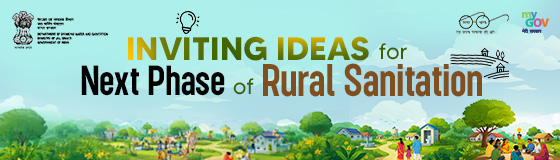
      Inviting Ideas for Next Phase of Rural Sanitation
      Start Date 01/08/2026 - 11:49
      End Date 02/10/2026 - 23:45
      Time zone: IST (GMT +5.30 Hrs)
      Login to Participate
      Sector:
      Water & Sanitation
      Created : 1/08/2026
      667
      Total Comments
      485
      Users Participated

      In the last 12 years, SBM(G) has evolved from a sanitation programme into a nationwide movement that has improved public health, enhanced dignity of women, empowered communities and promoted sustainable rural development. Building on the achievement of Open Defecation Free (ODF) status, SBM(G) 2.0 has expanded its focus to sustaining sanitation outcomes through interventions such as Individual Household Latrines (IHHLs), Community Sanitary Complexes (CSCs), Solid and Liquid Waste Management, Plastic Waste Management, Faecal Sludge Management, GOBARdhan, Information, Education and Communication (IEC) and Capacity Building. The current phase of the Mission is scheduled to conclude in March 2027.

      As the Department prepares the roadmap for the next phase of rural sanitation, it seeks ideas from citizens to sustain and strengthen the gains achieved under SBM(G) while addressing emerging challenges related to waste management, resource recovery, environmental sustainability, Operation & Maintenance (O&M) and long-term community ownership of assets and outcomes. Innovative, practical and scalable solutions are required to enhance sanitation service delivery, strengthen waste management systems, promote behavioural change and accelerate the transition towards a circular waste-to-wealth economy. Given that the diversities of rural areas from urban cities, suggestions and ideas, specific to rural scenarios will be highly appreciated. Along with these, with peri-urban areas / villages also growing fast and having characteristics of urban centers, solutions specific for such areas are also being sought.

      The success of SBM(G) has been driven by the spirit of Jan Bhagidari (People's Participation). Citizens, Gram Panchayats, SHGs, youth, Swachhagrahis and other stakeholders have been at the forefront of transforming rural sanitation and their continued participation will remain critical for sustaining these achievements. 

      Accordingly, the Department of Drinking Water and Sanitation (DDWS), Ministry of Jal Shakti in collaboration with MyGov, invites citizens, youth, Gram Panchayats, SHGs, academic and research institutions, development partners and other stakeholders to share their suggestions and ideas for the next phase of rural sanitation programme on the following:

      1. Areas to be taken up (including existing areas where gaps may be remaining)
      2. New technological interventions for SWM, GWM, FSM.
      3. Rural Sanitation 
      4. Solutions for treating pollution in small nallahs/rivulets discharging into rivers in rural areas.
      5. Adoption of solutions based on traditional knowledge and ancient wisdom in new settings for rural India. 
      6. Any other area related to the programme.

      The suggestions received will help and guide the next phase of SBM(G) and contribute to building cleaner, healthier and environmentally sustainable villages that will be strong contributors for achieving the goal of Viksit Bharat@2047.

      Participation Guidelines 

      1. All Citizens, youth (including students), Gram Panchayats & SHGs, academic and research institutions, development partners, NGOs and other stakeholders are invited to contribute ideas for shaping the next phase of rural sanitation and solid-liquid waste management under Swachh Bharat Mission (Grameen).
      2. For detailed information about SBM(G) Phase II, applicants may visit the SBM(G) Phase II operational guidelines available on website of the Department (https://swachhbharatmission.ddws.gov.in). The guidelines can also be assessed through: https://swachhbharatmission.ddws.gov.in/sites/default/files/Guidelines/SBMG%20Phase-II%20Operational%20Guidelines.pdf 
      3. Suggestions may be submitted on any of the major components of SBM(G), including Individual Household Latrines (IHHLs), Community Sanitary Complexes (CSCs), Solid Waste Management, Liquid Waste Management, Plastic Waste Management, GOBARdhan, Faecal Sludge Management, Information, Education and Communication (IEC) and Capacity Building. Global best practices forming the bases of solution, may also duly mentioned and referred.
      4. Participants are encouraged to propose innovative, technology-driven, scientific, managerial, practical, feasible and scalable solutions to address rural sanitation challenges and strengthen long-term sustainability.
      5. Suggestions should focus on supporting the Department of Drinking Water and Sanitation (DDWS), Ministry of Jal Shakti, in developing the roadmap for the next phase of rural sanitation for India.
      6. Participants are required to register on the MyGov platform and submit their suggestions through the prescribed online form.

      PradeepKumarPandey_213
      PradeepKumarPandey_213
      2 months 1 week ago

      ग्रामीण स्वच्छता के अगले चरण में केवल शौचालय निर्माण पर नहीं, बल्कि कचरा प्रबंधन, प्लास्टिक-मुक्त गांव, गीले एवं सूखे कचरे का अलग-अलग संग्रह, जैविक कचरे से खाद/बायोगैस निर्माण और गांव में नियमित सफाई व्यवस्था पर विशेष ध्यान दिया जाना चाहिए। प्रत्येक गांव में स्थानीय स्तर पर कचरा संग्रह एवं प्रसंस्करण की व्यवस्था विकसित की जाए और स्वयं सहायता समूहों, युवाओं तथा स्थानीय उद्यमियों को इससे जोड़ा जाए। इससे स्वच्छता के साथ-साथ ग्रामीण रोजगार और स्थानीय आय के अवसर भी बढ़ेंगे। इसके साथ स्कूलों और पंचायतों के माध्यम से स्वच्छता के प्रति व्यवहार परिवर्तन और जन-जागरूकता को लगातार बढ़ावा दिया जाए। मेरा सुझाव है कि प्रत्येक गांव के लिए “Zero Waste Village” का लक्ष्य निर्धारित कर चरणबद्ध तरीके से काम किया जाए।1. हर घर से कचरा संग्रह — गीला और सूखा कचरा अलग-अलग। 2. गांव में कचरा बेचने/रीसाइक्लिंग केंद्र — प्लास्टिक, कागज, धातु आदि बेचकर पंचायत की आय। 3. गीले कचरे से खाद — किसानों को कम कीमत पर जैविक खाद उपलब्ध हो। 4. गोबर से बायोगैस — पशुपालक परिवारों को जोड़कर गैस और जैविक खाद दोनों।

      TejaswiniNikhare_3
      TejaswiniNikhare_3
      2 months 1 week ago

      To sustain SBM(G) gains toward Viksit Bharat@2047, we must focus on three strategic pillars: ​School & Home Interventions: Integrate mandatory experiential sanitation modules in rural schools. Empower children as Swachhata Ambassadors who drive household hygiene practices, reinforced by targeted parental awareness campaigns. ​Accessible & Hygienic Public Facilities: Ensure all Community Sanitary Complexes (CSCs) are free of charge, equipped with continuous water, soap, and hand sanitizers. Partner with local Women Self-Help Groups (SHGs) for daily Operation & Maintenance (O&M), using user-feedback QR codes for accountability. ​Advanced Sewage & Stream Treatment: Adopt Japanese-style decentralized wastewater management (Johkasou) for greywater and blackwater. Replicate their eco-transparency model by introducing bio-indicator ponds (housing sensitive native fish) at village discharge points, proving water cleanliness visually to build community pride. ​

      kapilaggarwal_17
      kapilaggarwal_17
      2 months 1 week ago

      My views for when government make roads in rural areas they should give swerage pipeline and water supply while making roads in rural areas as we hv seen when raoads are made it used to broken bcs of no swerage and water draiage system and when they put water and sewrage system pipeline the roads are broken bcs of this we get economy loss as per my views first there should be swerage system then water supply system and after all this there should road building with thos we will safe million of rupees in one project

      Lallianpuii_4
      Lallianpuii_4
      2 months 1 week ago

      In rural areas,,non-biodegrable waste is causing a lot of problems..I think it would be good if these non-biodegrable waste bins could be distributed in every village..

      kunal kishore_11
      kunal kishore
      2 months 1 week ago

      Rural sanitation is a big challenge for our country. I want to give some suggestion. 1 An awareness campaign should be started for sanitation. 2 Rural sanitation group will be formed for maintain it properly. 3 A social media campaign should be started for increase awareness among people. 4 social motivation should be started for sanitation.

      vibhashk23@gmail.com
      VIBHASH KUMAR
      2 months 1 week ago

      ग्रामीण स्तर पर अभी भी स्वच्छता पर अधिक ध्यान देने के लिए जरूरत है। हालांकि इसके लिए सबसे पहले ग्रामीणों के बीच जागरूकता अभियान चलाने की जरूरत है। स्वच्छता को लेकर अभी भी ग्रामीणों में गंभीरता की कमी है। इन दिनों मैं देखता हूं कि भोज भंडारा में शहर की तरह अब गांव में भी थर्मोकोल का प्लेट उपयोग हो रहा है। यह थर्मोकोल का प्लेट खेत-खलिहान को दूषित कर रहा है। इन सब बातों पर ध्यान देने की जरूरत है।

      AmitUjjainkar
      AmitUjjainkar
      2 months 1 week ago

      #(Next Phase of Rural Sanitation) स्वच्छ भारत मिशन के सुचारू संचालन हेतु ग्रामीण स्वच्छता एक स्वस्थ और स्वच्छ गाँव के लिए अत्यंत आवश्यक है। उचित शौचालय, सुरक्षित पेयजल, कचरा निपटान और साफ-सुथरा वातावरण बीमारियों को रोकने और जीवन की गुणवत्ता सुधारने में मदद करते हैं। 1-हर घर में स्वच्छ शौचालय होना चाहिए और खुले में शौच से बचना चाहिए। 2-ग्रामीणों को कचरे को अलग-अलग करना, नालियों को साफ रखना और कचरे का सही निपटान करना चाहिए। 3-स्कूल और सामुदायिक केंद्र, विशेषकर बच्चों में स्वच्छता के प्रति जागरूकता फैलाएँ। 4- सरकारी योजनाएँ और स्थानीय समुदाय मिलकर स्वच्छता सुविधाएँ विकसित कर सकते हैं। स्वच्छ गाँव ही स्वस्थ, सुरक्षित और खुशहाल समुदाय होता है। आइए अपने गाँव को स्वच्छ, हरा-भरा और रोगमुक्त बनाएँ।ग्रामीण स्वच्छता का अगला चरण केवल शौचालय निर्माण तक सीमित नहीं है, बल्कि यह एक समग्र स्वच्छ जीवनशैली की ओर बढ़ता कदम है। अब गाँवों में कचरा प्रबंधन, गीले और सूखे कचरे का पृथक्करण, तथा पुनर्चक्रण पर अधिक ध्यान दिया जा रहा है। स्वच्छ जल संरक्षण और जल स्रोतों की सुरक्षा भी इस चरण का महत्वपूर्ण हिस्सा है।

      anilkumar_28424
      anilkumar_28424
      2 months 1 week ago

      ग्रामीण स्वच्छता के अगले चरण (Next Phase of Rural Sanitation) के लिए यहाँ सबसे नया, अनोखा और ज़मीनी स्तर पर काम करने वाला 3-इन-1 स्मार्ट इकोसिस्टम मॉडल प्रस्तुत है:"स्वच्छ ऊर्जा-ग्राम 360°" (Smart Circular Rural Sanitation Ecosystem)यह आइडिया स्वच्छता को केवल कचरा उठाने या शौचालय तक सीमित न रखकर इसे रोजगार, बिजली और जल-संरक्षण से जोड़ता है।1. मुख्य इनोवेटिव विचार (Core Ideas)IoT-Enabled "स्मार्ट कम्युनिटी वाटर एंड वेस्ट हब":गांवों के गंदे पानी (Greywater) को साफ़ करने के लिए 'रूट-ज़ोन' (Natural Wetland Filtering) तकनीक का उपयोग, जिससे बिजली के बिना पानी साफ़ होकर खेतों की सिंचाई के काम आए।पानी के प्रवाह और सामुदायिक शौचालयों (CSC) की सफाई और पानी की उपलब्धता को ट्रैक करने के लिए सस्ते IoT सेंसर्स का इस्तेमाल।"GOBARdhan-to-Grid" + बायो-एनर्जी माइक्रो-ग्रिड:केवल व्यक्तिगत बायो-गैस प्लांट की जगह 3-4 गांवों के क्लस्टर पर माइक्रो-CBG (Compressed Bio-Gas) प्लांट।किसान और ग्रामीण गोबर/गीला कचरा जमा करेंगे और बदले में उन्हें मुफ्त जैविक खाद (Organic Fertilizer) या राशन/बिजली बिल में छूट मिलेगी

      (0.04 MB)
      subodh5050@gmail.com
      subodh bansal
      2 months 1 week ago

      2. हमारा तकरीबन 80% कूड़ा रसोई का निकलता है जिसको जानवर खा सकते हैं आराम से। तो हमें अपने आसपास खाली जगह पर जानवरों को रखकर जो सड़कों पर घूम रहे है या खेतों में चर रहे हैं फसलों को खा रहे हैं। वहां पर रसोई के कूड़े को डालना पड़ेगा ताकि जानवर खा ले। उनका जो गोबर होगा उसे गोबर गैस बनाकर आसपास ही हमें सप्लाई करनी पड़ेगी। गोबर का खाद में इस्तेमाल कर सकते हैं। गोबर के और भी सामान बन सकते हैं। 3. रद्दी बाले को कागज, कांच, प्लास्टिक, लोहा को हम बेचते है ही। 4. मिट्टी, मलबे को एक जगह इकट्ठा किया जा सकता है और जिसको जरूरत हो बहा से लेले। 5. पॉलीथिन बेग को कम करने के लिये मेंने एक नया आइडिया सोचा है। सरकार से बात बात करने को तैयार हूं। 6. अपना थैला साथ ले कर चलने का कैम्पेन चलाना पड़ेगा। मेंने गीत लिखा है। 7. कूडे को कम करने के लिये हम अपनी बोतल, गिलास, चम्मच, स्ट्रा, कटोरा साथ लेकर चले तो सिंगल ईस्तेमाल के ग्लास, स्ट्रा, चम्मच, कप, दोना का प्रयोग बहुत कम होगा। 8. Reuse के लिये वीडियो बना कर समझाना पड़ेगा। इस तरह बिना खर्च के स्वच्छ भारत हो जायेगा।

      subodh5050@gmail.com
      subodh bansal
      2 months 1 week ago

      देश में स्वच्छ भारत शुरू किया गया है जबकि वास्तव में ऐसा हो रहा है कि जनता अपने कूड़े को घर, फैक्ट्री, गोदाम, कार्यालय, रेल्वे, बस, वाहन से निकाल कर सड़क, पार्क, खाली जमीन पर, नाली, नाले, नदी, तालाब, समुद्र, पहाड़ पर फेंक रहीं है फिर नगर निगम पालिका सिर्फ सड़क से कूड़े को उठाकर शहर के बाहर या कहीं पर एक जगह कूड़े का पहाड़ इकट्ठा कर रहीं है। यह हो रहा है सिर्फ स्वच्छ भारत के नाम पर। य़ह स्वच्छ भारत ( clean india) नहीं थ्रोइंग इंडिया ( throwing india ) हो रहा है । मेंने गीत, content, slogan, logo etc.etc. लिखा है। जिससे फेंकने की आदत रुकेगी। जब तक कूड़ा फेंकना जारी रहेगा तब तक स्वच्छ भारत अभियान सफल नहीं हो सकता है। आज साफ़ करो कल फिर कूड़ा भर जायेगा। दूसरा कार्य शुरू करना है कूडे को कम करने का। तीसरा कार्य शुरू करना है कूडे को reuse दुबारा इस्तेमाल करने का चोथा कार्य होगा अपना थैला ले कर चलो। इस तरह मेरे पास zero waste management का पूरा आयडिया है।

      • First page « First
      • Previous page ‹ Previous
      • …
      • Page 31
      • Page 32
      • Page 33
      • Page 34
      • Current page 35
      • Page 36
      • Page 37
      • Page 38
      • Page 39
      • …
      • Next page Next ›
      • Last page Last »
      Please Log In to submit a comment.
      Get Involved
      • Groups
      • Do/Tasks
      • Discuss
      • Blog
      • Poll/Survey
      • Talk
      • Quiz
      • MG Prime
      • Campaigns
      • Pledge
      • Podcast
      • Media
      • Periodicals
      Get to Know
      • MyGov: An Overview
      • Associate with MyGov
      • Work at MyGov
      • Circulars
      • Pulse Newsletter
      • Tenders
      • Weekly Newsletter
      • MeitY Dashboard
      • Sectors
      • Skills
      • Area of Interest
      • Age Group
      • National Events
      • Archive Sites
      Help & Support
      • Contact Us
      • FAQ
      • Feedback
      • Help
      • Link To Us
      • Public Grievance
      • Site Map
      • Terms & Conditions
      • Usage of Aadhaar
      • Web Information Manager
      • ICC
      • MyGov Social
      • Points and Badges
      • Website Policies
      Useful Links
      • MyGov Quiz MyGov Quiz
      • Transforming India Transforming India
      • MyGov Innovation MyGov Innovation
      • MyGov Pledge MyGov Pledge
      • MyGov Blog MyGov Blog
      • Self4Society Self4Society
      • Campus Program Campus Program
      • MyGov Saathi Saathi
      Follow us
      Twitter Twitter 33.11 + Lakh Followers Facebook Facebook 15.14 + Lakh Followers Instagram Instagram 30.73 + Lakh Followers YouTube YouTube 7.43 + Lakh Subscribers LinkedIn LinkedIn 1.63 + Lakh Followers Messenger Messenger 1.60 + Lakh Followers WhatsApp WhatsApp 910.05 + Lakh Followers DailyHunt DailyHunt 7.2 + K Followers Public Public 85.5 + K Followers ShareChat ShareChat 82.22K Followers Snapchat Snapchat View All
      QR Code

      Download the MyGov Mobile App Join us in building a New India on the move.

      App Store Play Store
      NIC logo

      © Content owned, updated and maintained by the MyGov Cell. This website belongs to MyGov, Ministry of Electronics & Information Technology, Government of India.
      Platform is designed, developed and hosted by National Informatics Centre.

      CQW - MyGov certificateCertified Quality Website
      • Meity
      • Digital India
      • National Portal of India
      • Data Portal

      Copyright © MyGov 2014

      mygov-1 - Last Updated: October 30, 2026
      Top
      This website uses cookies to provide a better user experience.
      By clicking accept, you agree to the policies outlined in the Cookie Settings.