Home | MyGov

Accessibility
Accessibility Tools
Color Adjustment
Text Size
Navigation Adjustment
Screen Reader iconScreen Reader

Inviting suggestions on the draft National Electricity Policy (NEP) 2021

Inviting suggestions on the draft National Electricity Policy (NEP) 2021
Start Date :
May 03, 2021
Last Date :
May 15, 2021
23:45 PM IST (GMT +5.30 Hrs)
Submission Closed

Under Section 3 (3) of the Electricity Act, 2003, the Central Government may, from time to time, in consultation with the State Governments and the Central Electricity Authority, ...

Under Section 3 (3) of the Electricity Act, 2003, the Central Government may, from time to time, in consultation with the State Governments and the Central Electricity Authority, review or revise, the National Electricity Policy. In compliance of section 3 of the Electricity Act 2003, the Government of India had notified the National Electricity Policy on 12th February 2005.

2. According to Section 66 of the Electricity Act “the Appropriate Commission shall endeavor to promote the development of a market (including trading) in power in such manner as may be specified and shall be guided by the National Electricity Policy”.

3. The Central Electricity Regulatory Commission (CERC) and State Electricity Regulatory Commissions (SERCs), in the discharge of their functions, shall be guided by the National Electricity Policy under Section 79 and Section 86 of the Electricity Act, respectively.

4. In this regard, it is informed that the Ministry of Power vide Order dated 12.04.2021 has constituted an Expert Committee under the chairmanship of Shri Gireesh Pradhan, Ex-Chairperson, CERC to prepare and recommend National Electricity Policy (NEP), 2021 (copy enclosed). The Expert Committee is required to submit its suggested draft NEP 2021 within two months.

5. The National Electricity Policy, 2021 needs to play an important role in deciding the future of the power sector with renewed reform measures for the economic growth of the country. The main focus is expected to be on decarbonization, power market development, distributed generation in view of rooftop solar and other reliable new technology, etc. The policy may be consumer centric i.e., giving choice to consumers, better services, reliable and quality power, etc. Security of supply, cybersecurity, resilience in the power sector in view of the disasters management, securing supply to all consumers but in particular, all the essential loads in the event of any crisis, etc. are others areas of importance.

6. The suggestions of the various stakeholders including State Governments, Financial Institutions, Industries, consumers, etc. are very important for the future of the power sector. It is requested to submit your brief suggestions along with the suggested specific formulations, which you feel that need to be incorporated in the NEP 2021, in around 1000 words on the MyGov portal.

Click Here to read the draft National Electricity Policy (NEP) 2021.

The last date for submission is 15th May 2021.

Reset
Showing 678 Submission(s)
Biki Das
Biki Das 5 years 1 month ago
Its high time that we think of 'One Nation One Power' concept in India. No matter the distribution system,cost of electricity should be the same pan India. Often we see that some states remain deficient while some has surplus power. Power should be centralised, regardless of its generation or distribution. Grid sources( Renewable or Non renewable) should be connected. There should be a central control station and a central grid. Focus should be more towards renewable sources as it is the future.
Abhinav Joshi
Abhinav Joshi 5 years 1 month ago
Electricity is the most important thing of the people in world. If there was no electricity no phones no battery. This becomes the situation which the India is facing for Oxygens tankers for COVID people. Just like if we cut the trees there is no oxygen, same as if we pollute the water, it creates a time there was no hydro-electricity plant. As we use electricity in more-and-more demand it is not a renewable thing that can renewed after some yrs. So, please don't use the electricity in extra.
Abhinav Joshi
Abhinav Joshi 5 years 1 month ago
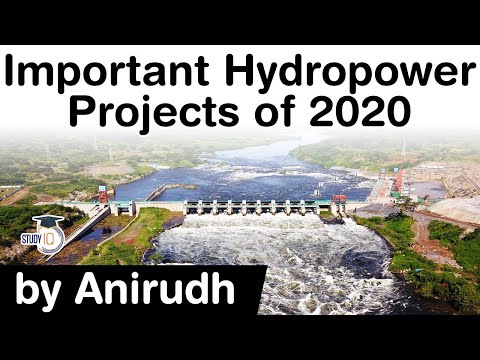
The responsibility of the government is to provide electricity to those people who are living without electricity now times. electric energy is very necessary in daily life we need to save it so that is usable for future use. We need to give more focus to Solar energy so that the whole when the sun is there we can use his energy, mostly in Summer. Those people who live near the rivers can give a helping hand to the government workers, so that they can place hydro-plants as faster as they can.
Shanta Srivastava
Shanta Srivastava 5 years 1 month ago
हमारे देश में बिजली की कमी भी नहीं रहेगी साथ ही हर घर को सुविधाजनक सुचारू रूप से गुणवत्तापूर्ण व सस्ती बिजली मिल सकेगी! इसके लिये प्रोत्साहित सब्सिडी व बिजली की फालतू बर्बादी न करने के लिये प्रचार प्रसार के माध्यम से लोगों को जागरूक किया जाना आवश्यक है! आज इस कोरोना संकट को देखते हुये सौर ऊर्जा पर्यावरण सुरक्षा, देश की अर्थव्यवस्था सुधारने के साथ ही देश में बिजली की कमी को सुधारनेका एक बहुत ही अच्छा स्वस्थ माध्यम है! "हर छत पर हो सोलर प्लान्ट बिजली लेना हो आसान स्वस्थ रौशनी हर घर रौशन" जय हिन्द!
Shanta Srivastava
Shanta Srivastava 5 years 1 month ago
बहुत ही बेहतर व्यवस्था है साथ ही लोग सोलर पावर से बिजली स्वयं की आवश्यक्ता की पूर्ति के साथ ही आस पास के लोगों को भी बिजली उपलब्ध कराकर अपनी आमदनी बढा सकते है इसके लिये सरकार को बडे़ पैमाने पर सोलर पैमाने की व्यवस्था करनी होगी जिससे पर्यावरण स्वच्छ, स्वस्थ व सुरक्षित रहेगा तथा कोरोना जैसी बीमारी महामारी की भविष्य में पुनरावृत्ति नहीं होगी! सरकार को चाहिये ग्रामीण, कस्बा अधवा शहर की रोड लाइट (स्ट्रीट लाइट) की व्यवस्था सोलर पावर से ही होनी चाहिये! सौर ऊर्जा से अधिक से अधिक बिजली उत्पादन करने से