 GOVERNMENT OF INDIA


All Blogs Under MyGov
Earthen Bunding to harvest Rainwater : A Story of Coimbatore
Introduction Coimbatore District is located in the north-western part of Tamil Nadu State. The groundwater was overexploited in 213 out of 228 Gram Panchayats of the district while the remaining 15 were in semi-critical zone. During the last 10 years, the average rainfall in the district declined from 690 mm to 616 mm, which leads to a reduction in the water table and natural resources. An uncertainty in seasonal monsoon reduced water storage in the reservoirs and conventional water bodies with depletion of the water table.
Winner Announcement: Jal Bachao Video Banao Puraskar Pao Contest
In an attempt to spread awareness about conservation of water, Ministry of Water Resources, River Development and Ganga Rejuvenation launched a contest named as “JalBachao, Video Banao, PuraskarPao” from 10th July 2018 running till 4th November, 2018.
Afforestation activity in Mai Chal Chorian village
As many as 15,000 saplings were planted across 15 hectares of forest land in Mai Chal Chorian village of Dasuya block in Hoshiarpur district of Punjab in 2018-19. The afforestation activity was carried out under PUNCAMPA (Punjab Compensatory Afforestation Fund Management and Planning Authority) degraded programme of the state government. PUNCAMPA is meant to accelerate activities related to conservation of forests and wildlife and development of infrastructure in these sectors. It aims to promote conservation, protection, regeneration and management of forests.
Winner announcement for the first month of Water Heroes: Share Your Stories Contest
In an attempt to promote value of water in general and for supporting country-wide efforts on water conservation and sustainable development of water resources, Department of Water Resources, River Development and Ganga Rejuvenation, Ministry of Jal Shakti launched a contest named “Water Heroes : Share Your Stories” from 1st September 2019 running till 30th June, 2020. For the first month of the Contest, entries were invited from 1st September to 30th September 2019, on MyGov platform.
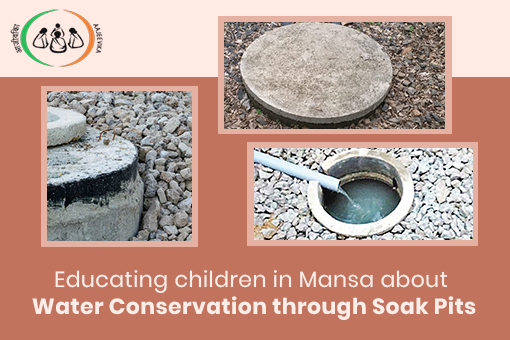
Educating Mansa Children about conservation of water through Soak Pits
Introduction Mansa District falls in the southern part of Punjab. Agriculture forms the backbone of the district economy. The main source of irrigation is canals, dug wells and tube wells. The major concern of the district is depleting water table. Being a desert district, Mansa has sandy soil, which has great absorption capacity and a low groundwater level. This makes the district suitable for the construction of soak pits. The idea of constructing soak pits in schools was mooted by district administration as a lot of grey water is generated from cooking midday meals and washing of utensils.
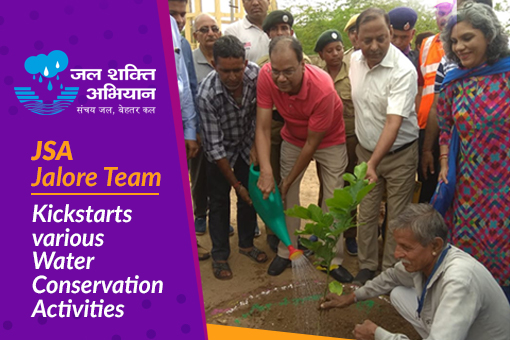
JSA Jalore Team kickstarts various water conservation activities
Jalore is a dark zone district in Rajasthan where the extraction of groundwater takes place at a faster rate than its recharge. Although water from the Narmada canal is used for drinking purposes, there is insufficient water for agriculture and other uses, considering that the district receives scanty rainfall.
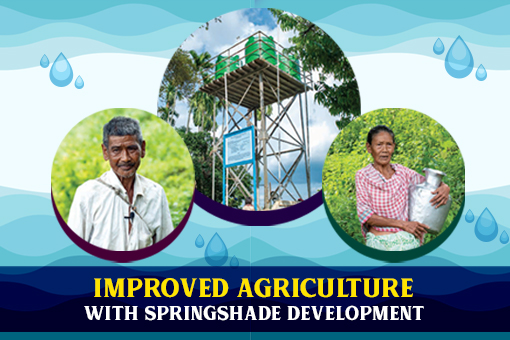
Improved Agriculture with Springshade Development
Introduction The Mahabari Deopani area in Dooars region of West Bengal has perennial springs which are the only source of water for drinking and domestic consumption. In the last 3 years, these springs had started drying up and turned seasonal. Consequently, the homemakers had to trek upstream for about 500–700 m through sloped terrain to fetch water. Recharging of groundwater by checking run-off was found to be the only solution to rejuvenate the spring.
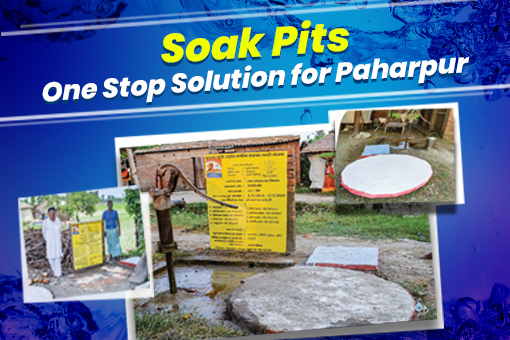
Soak Pits: One Stop Solution for Paharpur
Introduction Uttari Noneya and Enarwabhar villages, which were located in Paharpur block in Purbi Champaran District of Bihar, had no proper drainage system. As a result, wastewater was stagnating near the houses, creating unhygienic conditions and providing a breeding ground for mosquitoes. To address this issue, it was decided to provide soak pits to individual households in these villages. The primary objective of this intervention was not only to improve the hygiene in these villages but also to use the wastewater for recharging the groundwater.
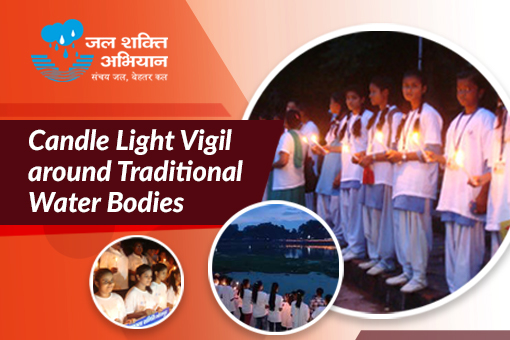
Candle Light Vigil around Traditional Water Bodies
With a view to generating awareness about the importance of water conservation and the need to protect traditional water bodies, a candle light vigil was organized around the Collectorate Pond in Bhojpur district of Bihar on 3rd September, 2019.
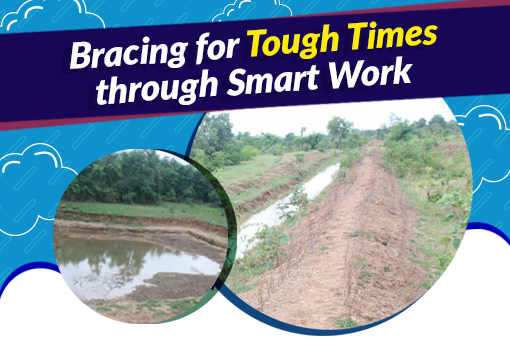
Bracing for Tough Times through Smart Work
Introduction Banjhimunda village is located in Kantamal block of Boudh District in Odisha. The village experiences frequent droughts and acute drinking water shortage due to its location and untimely rainfall for at least 4–6 months in a year. Frequent droughts forced people to either migrate to other places for employment or depend on forest for livelihoods. The average annual rainfall in the district is 1,510 mm but most of the rainwater received during monsoon drains away damaging agricultural fields and the main road, and it remains dry during the rest of the year.
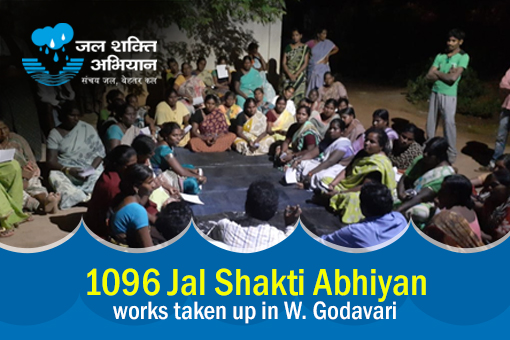
1096 Jal Shakti Abhiyan works taken up in W. Godavari
As many as 1660 water conservation works have been sanctioned in the district of West Godavari in Andhra Pradesh, of which 1096 are in different stages of progress, according to Central Nodal Officer (CNO), Mr. Sudhaker Shukla, Chief Economic Adviser, Ministry of Rural Development.
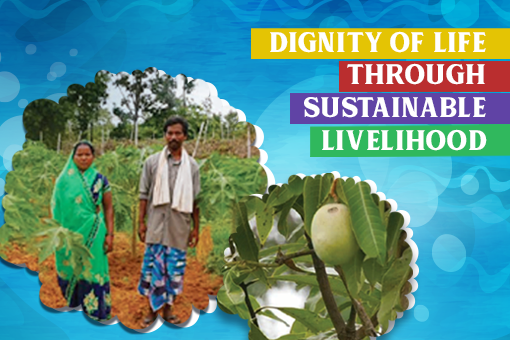
Dignity of Life through Sustainable Livelihood
Introduction Kodasiya Gram Panchayat is located in Lailunga block of Raigarh District. While 95% of households primarily depend on agriculture, only 5% have irrigation facilities. The villagers mainly relied on rainfall for cultivation. The farmers were facing problems due to the degradation of natural resources and low agricultural production. The water conservation approach in cultivation was in high demand. The groundwater recharge was low due to sloppy and undulating terrain and high run-off.