 GOVERNMENT OF INDIA


All Blogs Under MyGov
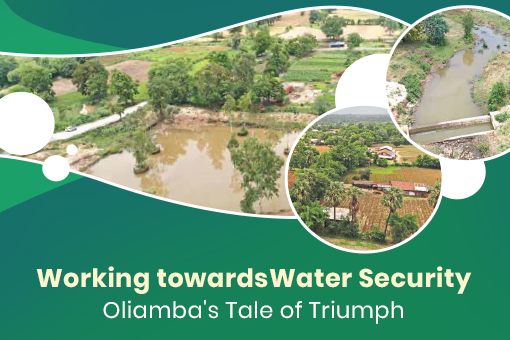
Working towards water security : Oliamba’s Tale of Triumph
Oliamba village is located in the Chhota Udepur District of Gujarat,which is predominantly populated by the Rathwa tribe. To the north of the villagelies the Orsangatributary, which is an important tributary of the Narmada River. The village has undulating land interspersed with small hills, rivers and nallas. Two-thirds of the land in the village is under agricultural use, most of which (91%) is rainfed. In rabi season, when work is not available in the village, people migrate with their families to other parts of Gujarat, mainly to Saurashtra, for their livelihood.
Revamping the village pond stabilizes the water scarcity
The residents of Bramhonon ki Sareri village, which is situated in Asind block of Bhilwara District in Rajasthan, have been facing severe water shortage, especially during the summer season. The annual rainfall in the region has remained less than 500 mm since 2008. The minor dams that are constructed in the early years have also dried up due to erratic rainfall because of which the women are forced to travel a long distance to fetch drinking water. The village has a pond called Dharmi Talav, which is filled with sand mounds and wild babul trees making it unsuitable for any use.
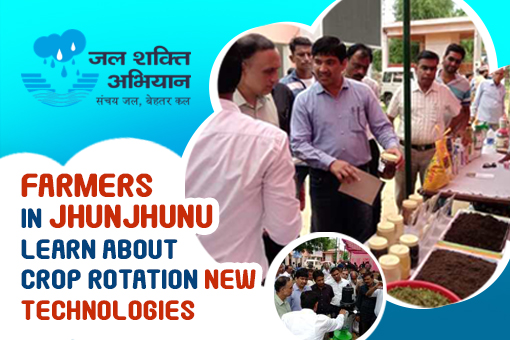
Farmers in Jhunjhunu learn about crop rotation, new technologies
The district administration of Jhunjhunu organized Kisan Melas in Buhana and Nawalgarh blocks to apprise farmers about crop rotation, technologies for round-the-year green fodder availability under scare water conditions; and about Azolla farming. The events provided a vital platform for farmers to discuss their challenges and for agricultural experts to disseminate information about improved practices and technologies.
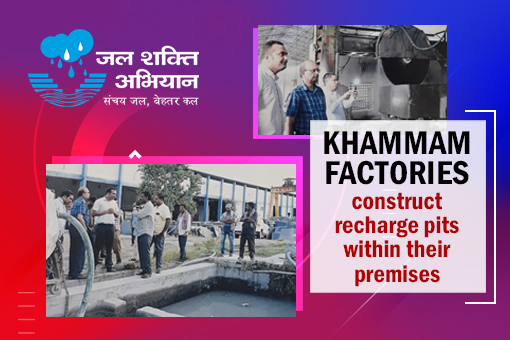
Khammam factories construct recharge pits within their premises
From 16th -31st July, 2019, a team of central government officers visited the most water stressed villages of Khammam district in Telangana, namely Gurralapadu, Arempula, and Kondapuram (Khammam Rural Mandal), Mallemadugu village (Khammam Urban) and Pindiprolu (Tirumalayapalem) to assess their water conservation measures. The team comprised Central Nodal Officer (CNO) – Sri Rajiv Ranjan Misra, DG NMCG; Sri Vijaya Prakash (BNO), Sri Ravinath Singh (TO), as a part of the Jal Shakti Abhiyan (JSA).
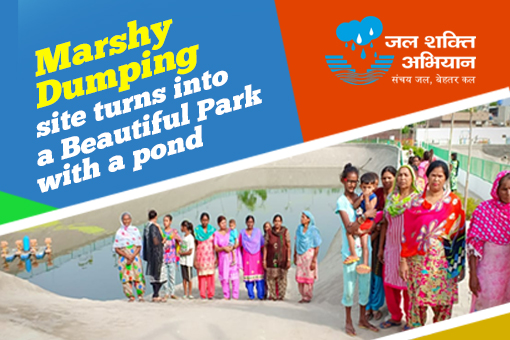
Marshy dumping site turns into a beautiful park with a pond
The people of Haripur have converted a filthy water body into a beautiful park complete with a pond that people now frequent to either take a stroll or allow their children to play. The transformation of the marshy dumping site into the picturesque place that it is now is a matter of pride for the village.
Winner Announcement of Logo Contest on Water Conservation
In an attempt to spread awareness about conservation of water, Ministry of Water Resources, River Development and Ganga Rejuvenation launched a contest named as “Logo Contest on Water Conservation” from 5th December, 2018 running till 5th January, 2019.
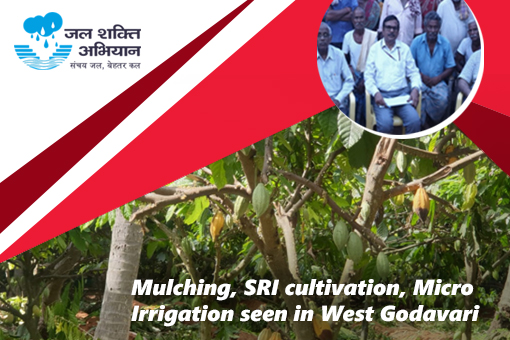
Mulching, SRI cultivation, Micro Irrigation seen in West Godavari
The district of West Godavari in Andhra Pradesh has adopted a number of best practices such as mulching, adopting of traditional rice cropping methods (System of Rice Intensification (SRI) cultivation) and micro irrigation to ensure water use efficiency.
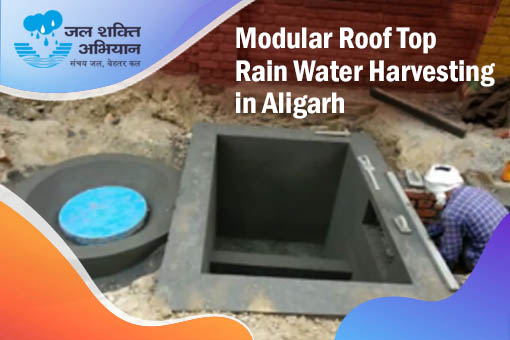
Modular Roof Top Rain Water Harvesting in Aligarh
Aligarh Development Authority (ADA) in Aligarh district of Uttar Pradesh is setting up a modular roof top rain water harvesting (RWH) unit atop the office of the Divisional Commissioner, Aligarh Division. From water shortage to water abundance, the system will also enhance water quality and provide unlimited water storage capacity.
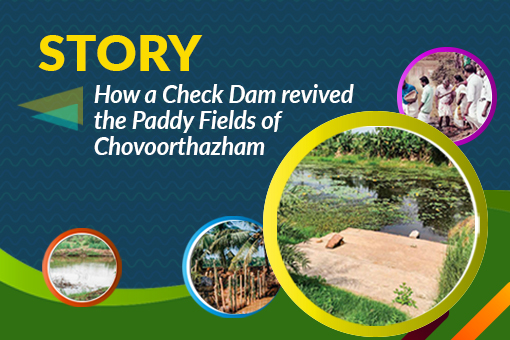
Story of how a Check Dam revived the Paddy fields of Chovoorthazham
Introduction Cherpu BP, which consists of Cherpu, Avinissery, Paralam and Valachira GPs, is located in Thrissur District. The farmers in these GPs undertake paddy cultivation. With groundwater being the main source of irrigation, the water becomes scarce during the summer season. Chovoorthazham, an area formed by portions of Avinissery, Cherpu and Paralam, is a boundary of the Chanam paddy field. Earlier, paddy cultivation was done with the support of temporary bunds.
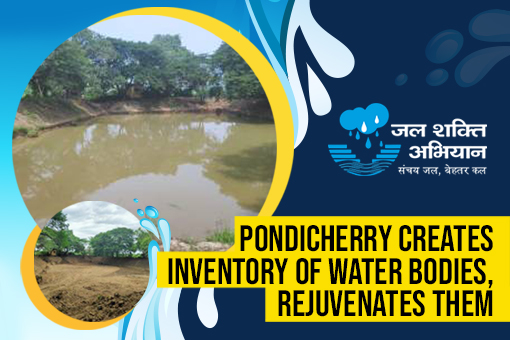
Pondicherry creates inventory of water bodies, rejuvenates them
It’s been an uphill battle for the seaside town of Pondicherry in the Union Territory of Puducherry over the past few months as district officials made every effort to rejuvenate, renovate and restore water bodies in the district, many of which were almost lost or encroached upon. The initiative is a part of Puducherry’s Neerum Oorum (Water and Village) Scheme to adopt water bodies, renovate them and protect them. According to District Collector, Dr. T. Arun, many of the water bodies and ponds were almost lost, overrun as they were with foliage, waste or encroachments.
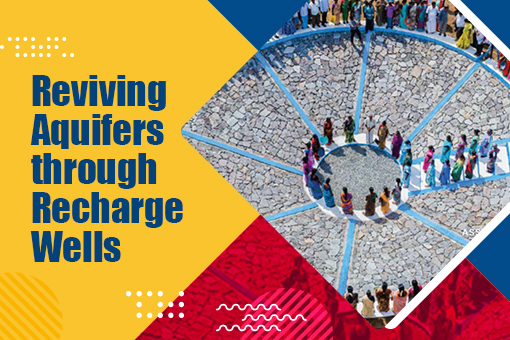
Reviving Aquifers through Recharge Wells
Introduction Eachangadu village in Mathur Panchayat Union is situated in Krishnagiri District of Tamil Nadu. In this village, the demand for water was greater than its availability. This made groundwater recharge a crucial aspect of overall water resource management through the revival of aquifers in this area. Water conservation and harvesting structures needed to be constructed to augment and improve the level of groundwater. Besides, the renovation of traditional water bodies also helped in drought mitigation.
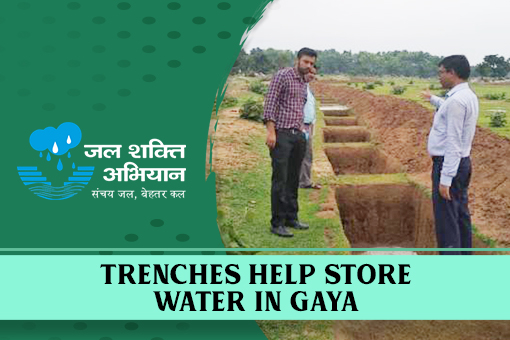
Trenches help store water in Gaya
A Jal Shakti Abhiyan (JSA) team from central government offices visited the holy district of Gaya which is home to the Mahabodhi Temple Complex in Bihar to assess water conservation measures. They found that trenches along the hillsides could help store rainwater and address water shortage issues. The team comprised Chief Nodal Officer (CNO) – Shri B. Pradhan, Additonal Secretary, Department of Animal Husbandry and Dairying, Government of India; Block Nodal Officer (BNO) – Shri.