 GOVERNMENT OF INDIA


All Blogs Under MyGov
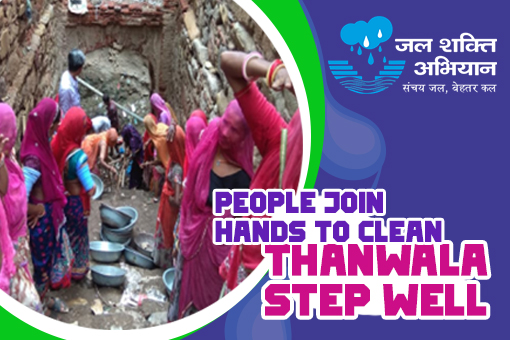
250 people join hands to clean Thanwala step well
Ahead of the monsoons, about 250 people, mainly women from the village of Thanwala in Ahore panchayat of Jalore district in Rajasthan got together and cleaned up the historic step well. The barely used step well had been dry for a few years but the exercise helped clean the well of accumulated debris and waste. It is hoped that the monsoons will help recharge the well. This was observed by a Jal Shakti Abhiyan (JSA) team that visited the step well and other water bodies and assessed the water conservation efforts of the district administration on 30th July, 2019.
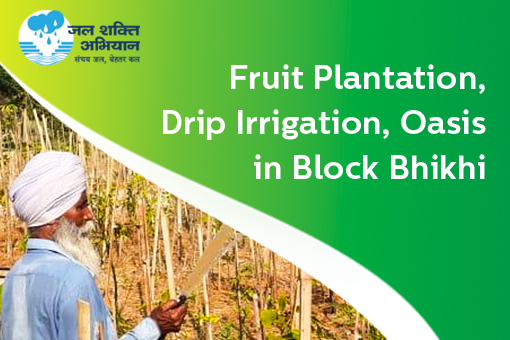
Fruit Plantation, Drip Irrigation, Oasis in Block Bhikhi
A number of plantation and water conservation activities have commenced in Bhikhi block of Mansa district in Punjab, as a part of the Jal Shakti Abhiyan (JSA) that is currently being implemented across the country.
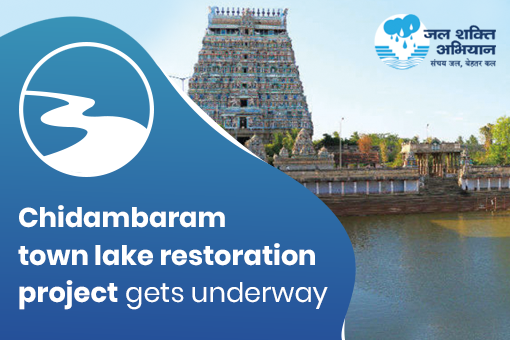
Chidambaram town lake restoration project gets underway
The ancient town of Chidambaram in Cuddalore district of Tamil Nadu is blessed with a large number of lakes and ponds. In total, there are 15 lakes, including 3 temple tanks and the combined surface areas of these lakes is around 100 acres with a rough storage capacity of 50 crore litres. The names of the tanks are: Vannan Kulam, Easwaran Kulam, Aanai Mettu Kulam, Nagachery Tank, Periya Anna Kulam, Gnanaprakasam, Ayikulam, Kumarankullam, Palamankulam, Thatchana Kulam, Ommakulam, Thillai Amman Koil Kulam, Elamai Akkinar Kulam, Kariaperumal Kulam, and Chinna Anna Kulam.
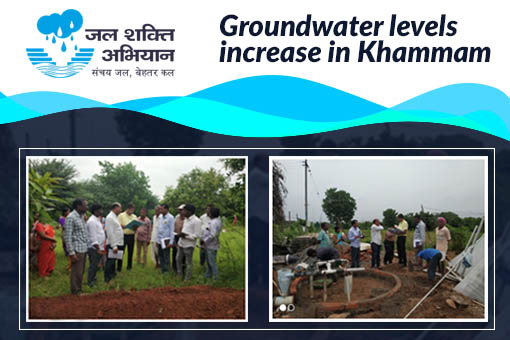
Groundwater levels increase in Khammam
As many as 1393 soak pits were constructed and handed over to individuals and the community in Thirumalaypalam Block of Khammam district in Telangana since the start of the Jal Shakti Abhiyan (JSA) on 1st July, 2019. As a result, groundwater levels in dug wells and bore wells have shown a remarkable increase.
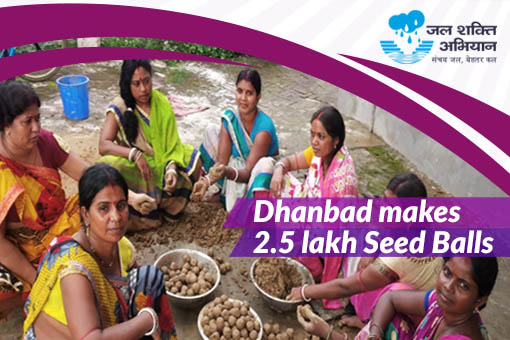
Dhanbad makes 2.5 lakh Seed Balls
The district administration of Dhanbad in Jharkhand has taken up various novel initiatives to plant saplings and conserve water. One of them is the preparation and distribution of a whopping 2.5 lakh seed balls through members of Self Help Groups (SHGs). The seed balls are scattered in colliery areas with open-cast coal mines to take root, increase green cover and reduce air pollution.
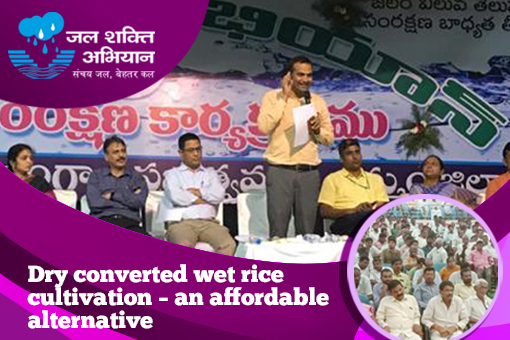
Dry converted wet rice cultivation – an affordable alternative
The district administration of Khammam in Telangana, in association with scientists of Krishi Vigyan Kendra (KVK) in Wyra have recommended the use of dry converted wet rice as an alternative method to transplanted rice to overcome shortage of water and labour scarcity.
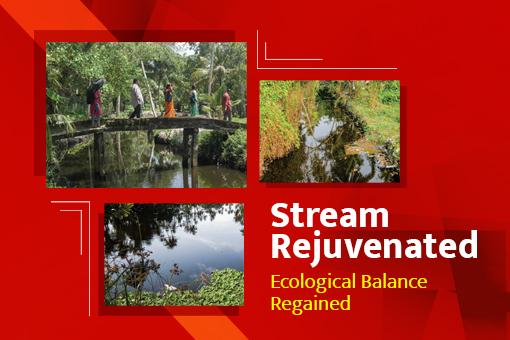
Stream rejuvenated -Ecological balance regained
Introduction Karippechal stream flows through Cherthala South, Kadakkarappally and Kanjikuzhi Gram Panchayats of Kanjikuzhi Block Panchayat of Alappuzha District. Over the years, the deposits from the shoreline and river pollution silted the flow of the stream, causing flood and other related disasters during the rainy season. This affected the lives of the people, especially those who were living on the shoreline. The floods also led to unhealthy living conditions such as contamination of drinking water, improper sanitation facilities, waterborne diseases, etc., during the monsoon season.
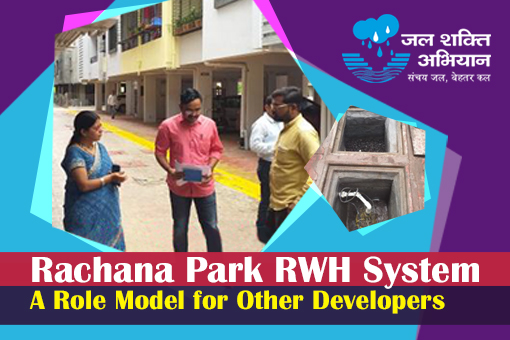
Rachana Park RWH system – A role model for other developers
The rainwater harvesting (RWH) system installed atop Rachana Park in Kopargaon township of Ahmednagar in Maharashtra benefits a total of 90 families living in the premises. Rain collected from 1850 sqm of the rooftop effectively charges 7 borewells, providing for all the water needs of the community.This was reported by a Jal Shakti Abhiyan (JSA) team comprising Smt. Richa Bagla, Nodal Officer, Ahmednagar District and Shri. Jitendra Wagh, Deputy Collector, EGS, Ahmednagar who visited the area situated close to Nagar-Manmad highway on 11th July, 2019 to inspect the RWH system.
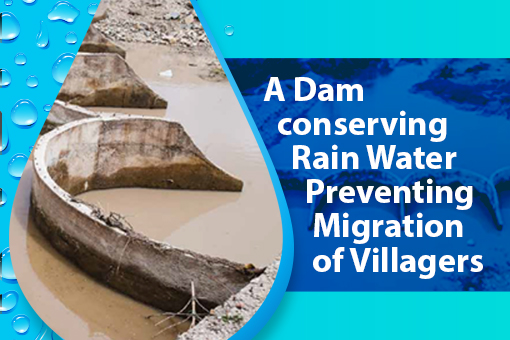
A Dam conserving Rainwater – preventing migration of villagers
Introduction Alaburu Gram Panchayat is located in Hagaribommanahalli block of Ballari District, and it has been facing water shortage issues. As a result, the families living there are prone to distress migration. In order to recharge the groundwater table and to increase the irrigation potential of the locality, the villagers of the Gram Panchayat have decided to harvest the rainwater by constructing multiarch check dams so that the effects of the drought are mitigated and durable water conservation assets are created.

Rainwater Harvesting to boost wealth in the valley
Introduction Nagulapally village is situated in Nagulapally Gram Panchayat of Julapalli block in Peddapalli District, and it is one of the drought-prone regions in the state. Due to low groundwater levels and rocky terrain, the villagers faced severe water problems. In monsoon, all the water drained to the nearby stream limiting the scope of recharging borewells and open wells. In Gram Sabha, it was decided to conserve rainwater by digging the staggered trenches and continuous contour trenches on various locations of the village.
Rewari outlines district water conservation plan
In order to initiate a workable water conservation drive, while enriching the groundwater-table and restoring traditional water bodies, the district administration of water stressed Rewari in Haryana has come out with a district water conservation plan. To begin with, all Gram Panchayats took inventories of existing water related infrastructure in their villages. The data was then integrated at block level and further integrated and compiled at the district Level. This facilitated the development of Rewari District Water Conservation Plan.
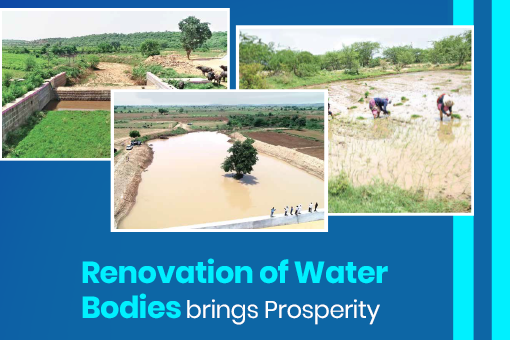
Renovation of water bodies brings prosperity
INTRODUCTION Badera Bharas Gram Panchayat falls under Bhitarwar block in Gwalior District. Occurrence of low rainfall over many years had created a situation where the villagers could not fulfil their domestic and agricultural needs. During summer, the villagers had to walk around 3 km to fetch drinking water. All the hand pumps and wells had dried up due to depletion of groundwater. Consequently, agricultural productivity declined, and the land had started turning fallow. Overall, the situation was such that the villagers were compelled to migrate.